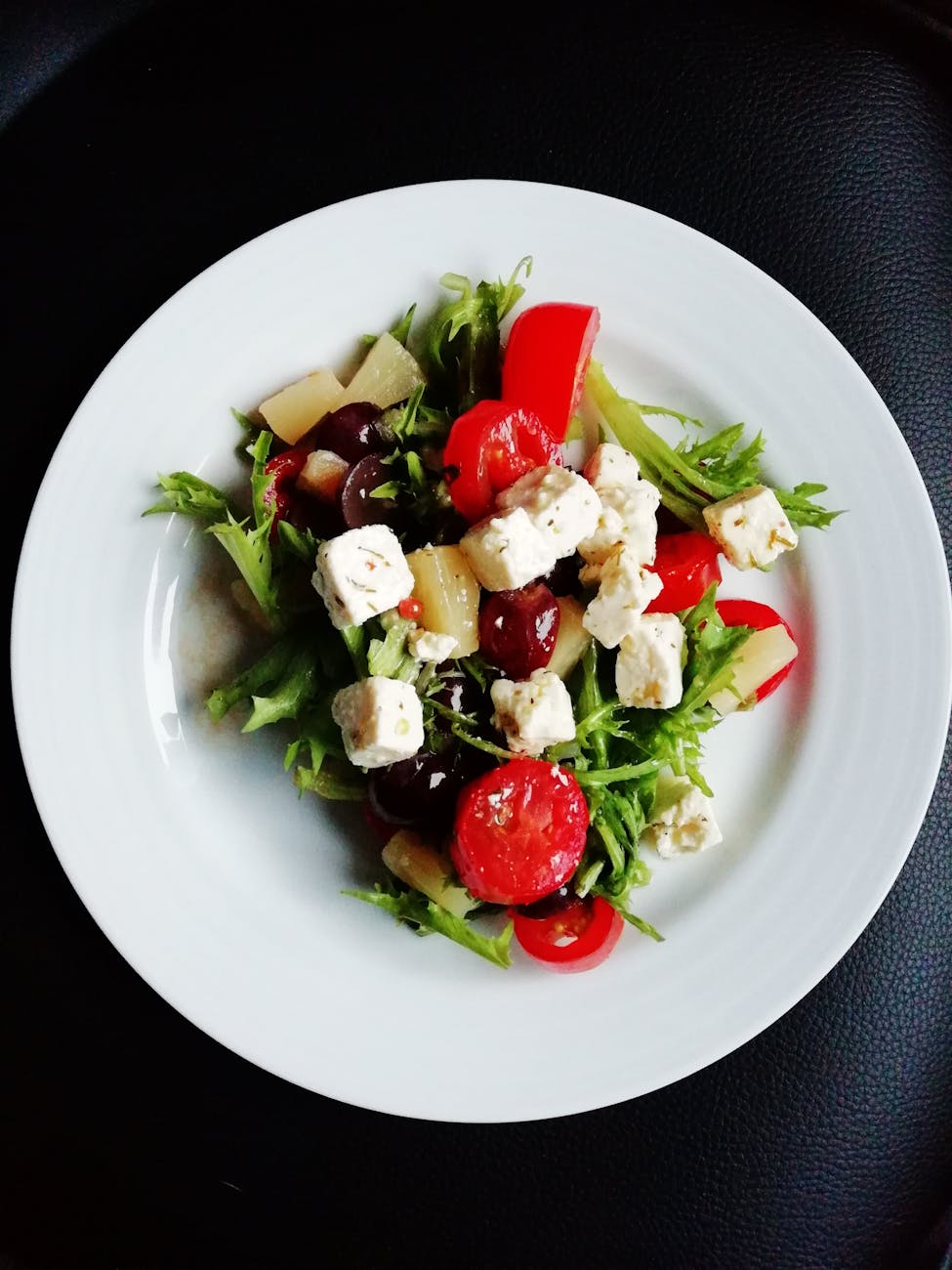
Salads are most people’s healthy option when eating out or at home, especially during the hot summer months when no one wants to turn on the oven. Salads come in many different shapes and sizes and contents. How is someone supposed to know that they have put together a decent meal for themselves or their family? There are essential elements that make up a nutrient dense meal out of a salad: veggies, protein, complex carbs, and a healthy fat source. {Bonus: hits on most of the 5 basic flavors!}
Let’s dig in and start with the veggies! You can start with salad greens- keep that ice berg lettuce for a sandwich or a burger- such as kale, mustard greens, Swiss chard, arugula, or radicchio plus you can add in some fresh herbs like basil, thyme, oregano, or parsely. You want a handful or two of greens as the base of which to build your masterpiece upon! Then add in assorted veggies to add in different flavors, spice, or sweetness such as tomato, cucumber, cabbage, carrot, peppers, strawberries or even a diced apple. You will want to add about a cup or a cup and a half and make sure they are colorful: try to eat the rainbow! Why does this matter? Different colored veggies provide different nutritional benefits. You can also add in other fruits such as blueberries, grapes, watermelon, or even kiwi. If you are really daring, you can add grilled or roasted veggies like summer squash, broccoli, beets, artichokes, or corn.
Now for the protein part . . . I am getting hungry just thinking about this salad! Protein is a must as it keeps you fuller longer and aides the body in recovering from exercise or other physical activity. Most people need to consume 20-30 grams of protein at each meal, some might need more or less depending upon their goals. Some examples of proteins are tuna, hardboiled eggs, chicken breast, steak, tofu, salmon, or ground turkey.
Adding in a complex carbohydrate adds in essential fiber to help with digestion and help with long-term energy. They might also add a different texture to your salad or even a crunch! These might include beans, lentils, chickpeas, quinoa, farro, whole wheat pasta, sweet potato or even a small amount of crackers. The basic amount to add would be about a 1/4 or 1/2 cup.
To finish off this masterpiece, you need to find a healthy fat source to provide flavor, help regulate your blood sugars, and help you not feel hungry right after eating. This is going to include the dressing which will have nutritional values that will be all over the board, but you need to shoot for something that would be around 100 calories per 2 tablespoons servings size. You will also want to search out ones that don’t contain loads of extra ingredients, colorings, additives, or seed oils. Here are other examples of fats to add such as nuts, shredded cheese, guacamole, olives, or avocado.
Bonus: you want a salad that hits on the 5 basic flavors- bitter (mustard greens, artichoke, etc to aid in creating that all important bile in your gut), sweet (blueberry or mango- help give your salad that pleasant flavor), sour (lemon or lime juice- help bring saliva up a notch to aid in digestion), salty (can come from many different things- proteins, nuts, dressing), and umami which is the savory deliciousness found in salmon, steak, pork, tomatoes, and other foods.
Here are some combinations to consider:
Strawberry Spinach Salad
- Veggies: Spinach, Strawberries, Red Onion
- Protein: Hardboiled Eggs
- Carb: Cannellini Beans
- Fats: Feta crumbles, Balsamic dressing
Greek Salad with Pasta
- Veggies: Arugula, Cucumber, Red Onion
- Protein: Diced Chicken Thighs
- Carb: Whole Wheat Pasta
- Fats: Green Olives, Greek Dressing
Steak Fajita Salad
- Veggies: Romaine Lettuce, Bell Pepper, Red Onion
- Protein: Sliced Steak
- Carbs: Black Beans
- Fats: Sliced Avocado, Salsa with Ranch
What are the components of your favorite salad?? Let me know in the comments!
 Snow Farms Holistic Wellness
Leave a comment